 Pest Control PRO LLC
Yellow jackets, hornets and wasps in Central Ohio peak from late summer into fall, when colonies are largest and most defensive. Nests in eaves, decks, ground burrows and wall voids become a safety problem fast, especially near doors, play areas and customer-facing business entrances.
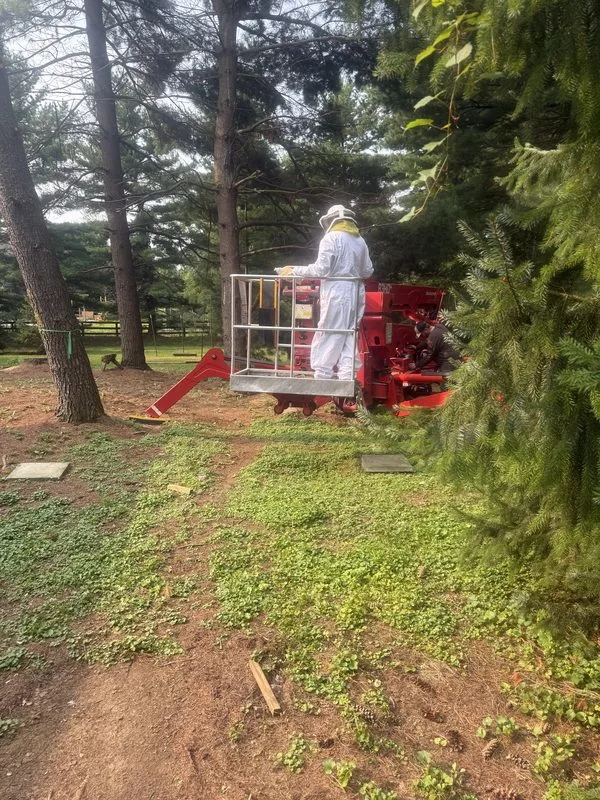
See more stinging insect work we've completed in Central Ohio →
Common stinging insects in Columbus
Yellow jackets
The most common stinging insect call in Columbus. Yellow jackets nest in the ground - under sidewalks, in mulch, in old rodent burrows - and in eaves and wall voids. Colonies start from a single queen in May and are largest and most defensive in August and September, when they switch from sugar to protein and show up at trash cans, grills and outdoor eating areas.
Honey bees
Honey bees are usually a relocation situation, not a pest situation. Swarms settle on tree branches, fence posts or meter boxes and can be moved by a beekeeper. A hive inside a wall void is different: it has to be removed, because leftover wax and honey attract ants and draws new colonies back to the same void. We work with local beekeepers when relocation is possible.
Bald-faced hornets
Gray and white papery nests the size of a football, usually hung in trees, shrubs or deck railings. They defend the area around the nest rather than foraging far, so problems start when a nest ends up near a walkway, driveway or door. Nests only last one season and are abandoned by fall.
Paper wasps
Open comb nests - no outer covering - on soffits, window frames and porch ceilings. Less aggressive than yellow jackets, but they will sting if the nest is disturbed or if someone sits under it regularly. They are the most common reason a Columbus homeowner notices wasps in spring, when a queen starts a fist-sized comb before the colony grows.
Cicada killers
The big, fast brown wasps people find digging holes in sandy yards - common around the Grandview area, the reservoirs and newer construction sites. They look intimidating but are mostly harmless, rarely sting, and die off after one season. We handle them when nests sit close to play areas or patios, and we do not treat them as an aggressive species.
Signs of Stinging insects
- Nests in roof eaves, soffits, window frames or porch overhangs
- Ground nests in mulch, under slabs, or in an old rodent burrow
- Insects repeatedly returning to a specific spot on the siding
- Buzzing inside a wall void, which usually means an interior nest
- Increased activity around trash, outdoor eating areas or pet food
- Paper or aerial nests the size of a fist or larger
How we treat Stinging insects
We identify the species and the nest location before treating. Yellow jackets, hornets and bald-faced hornets behave differently, and the method changes depending on whether the nest is exposed, in a soffit, or inside a wall.
Exposed nests are treated when the colony is inside and least active. Nests inside wall voids are treated from the exterior opening, because tearing into drywall usually spreads the problem and damages the structure.
Prevention is the part that lasts: we seal the entry points that let queens establish in a soffit in the first place, and mark problem areas so the same spots are checked on the next visit.
Prevention
Cover ground burrows and gaps in siding, keep trash cans closed, remove old nests early in spring, and do not run a mower or string trimmer over a ground nest. If you are allergic to stings, call before doing anything - most stinging insect calls come from someone who already tried to handle it.
Plans & pricing
Inspection is free for Central Ohio properties we service. Stinging Insects service is priced by scope - one-time as-needed treatment, or a quarterly plan under one of the three residential tiers that includes re-treatment between visits if the problem returns. See residential plans and commercial programs, or call 614-592-4616 for a quote before any work is scheduled.
FAQs about Stinging insects
How do you handle bee, wasp, and hornet nests?
Inspection, nest removal when appropriate, and preventive treatment of common nesting areas.
Are stinging insect treatments safe for kids and pets?
Yes. We use low-toxicity products and explain precautions before treatment.
When is stinging insect season in Central Ohio?
Colonies build through June and peak in August and September. The largest nests and the most dangerous removals happen in late summer and early fall.
Do you remove the nest or just spray?
We remove accessible nests. Nests inside wall voids are treated from the outside opening, then the entry point is sealed so the void is not re-established next season.
Can bees be relocated instead of destroyed?
Where the colony is a honey bee hive, we work with beekeepers for relocation rather than treatment. That is a different situation from wasps and yellow jackets.
Service Areas
Dublin · Columbus · Worthington · Powell · Hilliard · Westerville · Clintonville · Downtown · Linden · Plain City · Delaware · Galena · Lewis Center · Sunbury · Ostrander · Genoa · Upper Arlington · Whitehall · Gahanna · New Albany · Grove City · Groveport · Reynoldsburg · Canal Winchester · Obetz · Grandview Heights · Bexley · University District · Hilltop · Galloway · Pickerington · Marysville
Call 614-592-4616 for a free quote. Local company, 24/7, same-day service on active problems.
Call 614-592-4616